The waste and recycling guide.
Eight kinds of waste, how reusable, recyclable, heavy and special each one is, where it usually goes and what to keep in mind, plus a plain-English glossary of the words haulers use: cubic yard, tipping fee, C and D debris, roll-off and more.
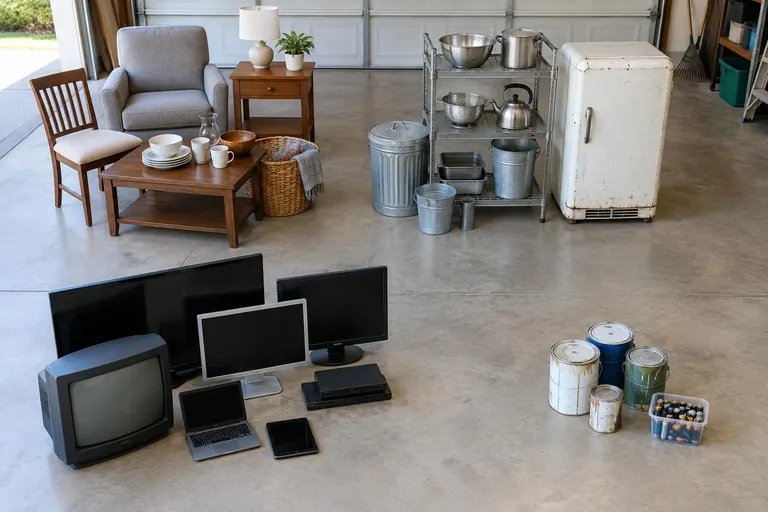
Where it all usually goes.
Scores are general comparisons for planning. Rules and facilities differ by city, and we tell you what applies to your job.
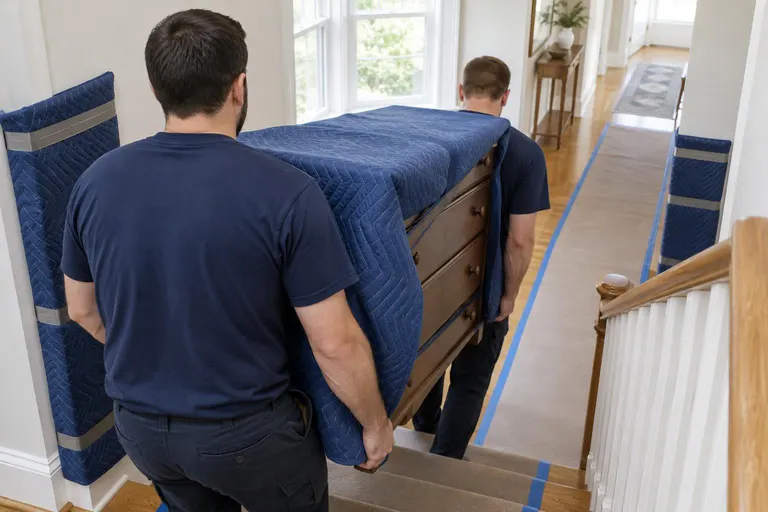
Furniture and household goods
Sofas, tables, dressers, housewares and clothing
- Often reused5 out of 5
- Recyclable2 out of 5
- Heavy3 out of 5
- Special handling1 out of 5
- Bulky4 out of 5
- Where it usually goes
- Usually donated first, then hauled
- Keep in mind
- Worn, stained or broken pieces go to disposal.
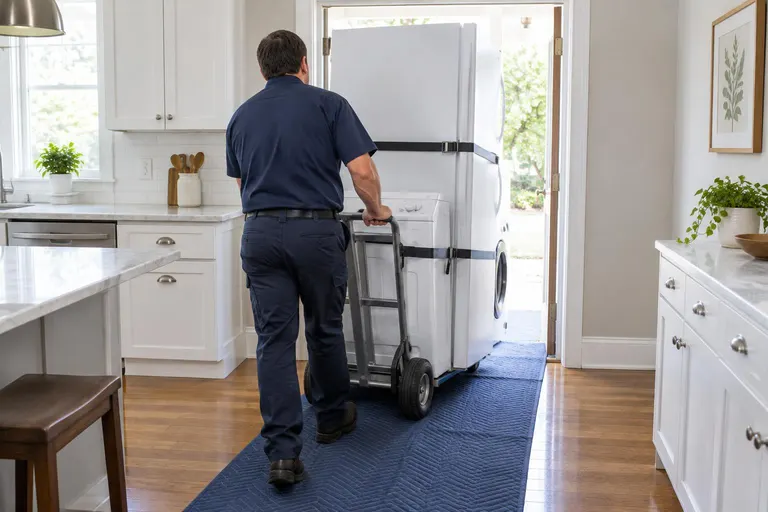
Large appliances
Refrigerators, washers, dryers, ranges and water heaters
- Often reused2 out of 5
- Recyclable5 out of 5
- Heavy5 out of 5
- Special handling3 out of 5
- Bulky4 out of 5
- Where it usually goes
- Scrap recycling, with refrigerant handled first
- Keep in mind
- Refrigerant appliances need a facility that can remove it.
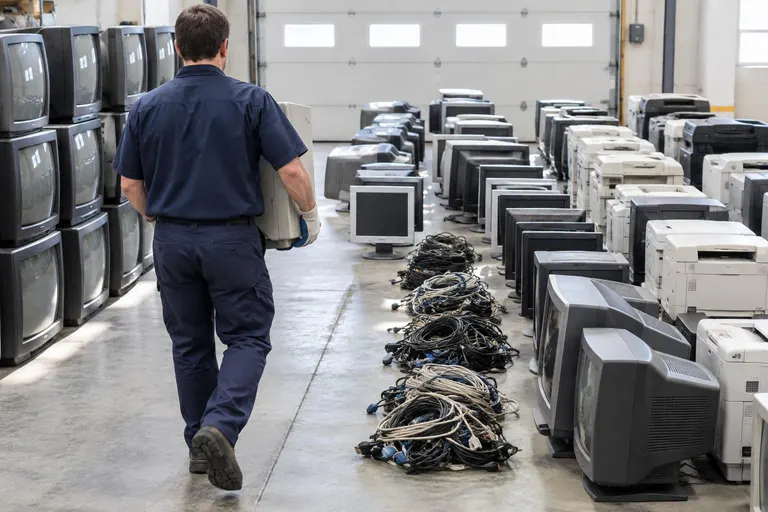
Electronics
TVs, monitors, computers, printers and cables
- Often reused2 out of 5
- Recyclable5 out of 5
- Heavy2 out of 5
- Special handling4 out of 5
- Bulky2 out of 5
- Where it usually goes
- Electronics recycling
- Keep in mind
- Wipe your data first, and expect a fee for some screens.
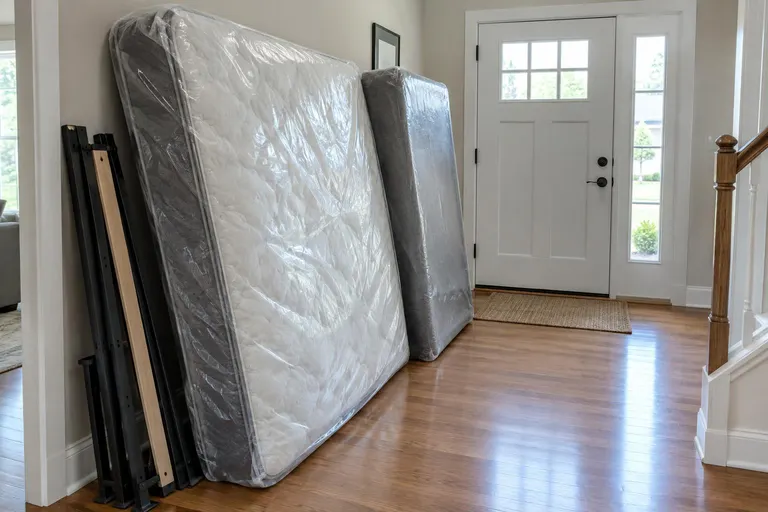
Mattresses and bedding
Mattresses, box springs and bed frames
- Often reused1 out of 5
- Recyclable2 out of 5
- Heavy2 out of 5
- Special handling2 out of 5
- Bulky5 out of 5
- Where it usually goes
- Wrapped, hauled and recycled where facilities exist
- Keep in mind
- Many facilities charge a fee per mattress.
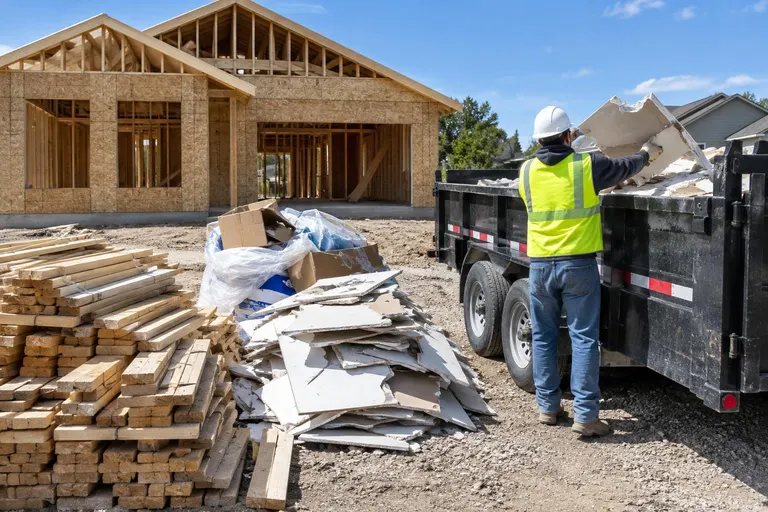
Construction debris
Lumber, drywall, tile, flooring, cabinets and packaging
- Often reused1 out of 5
- Recyclable3 out of 5
- Heavy5 out of 5
- Special handling2 out of 5
- Bulky4 out of 5
- Where it usually goes
- Construction and demolition facilities, with some recycling
- Keep in mind
- Concrete, tile and shingles are heavy and priced by weight.
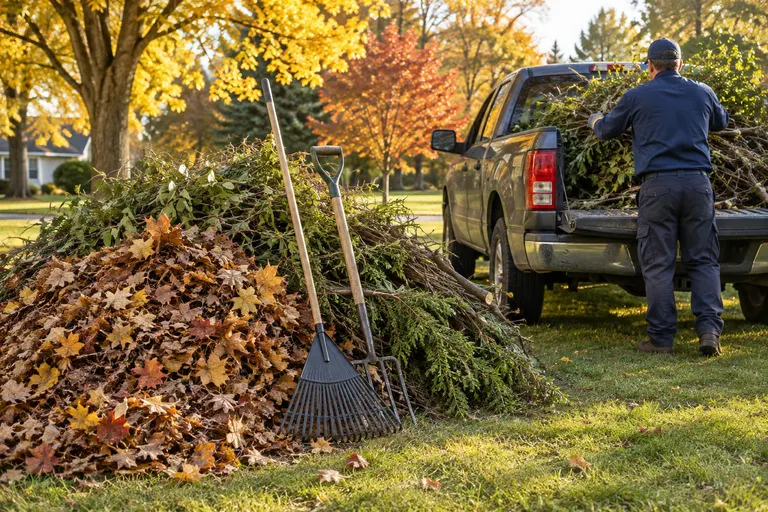
Yard waste
Leaves, limbs, brush, clippings and garden waste
- Often reused1 out of 5
- Recyclable4 out of 5
- Heavy2 out of 5
- Special handling1 out of 5
- Bulky4 out of 5
- Where it usually goes
- Composting and mulching where facilities accept it
- Keep in mind
- Very large logs and stumps need extra equipment.
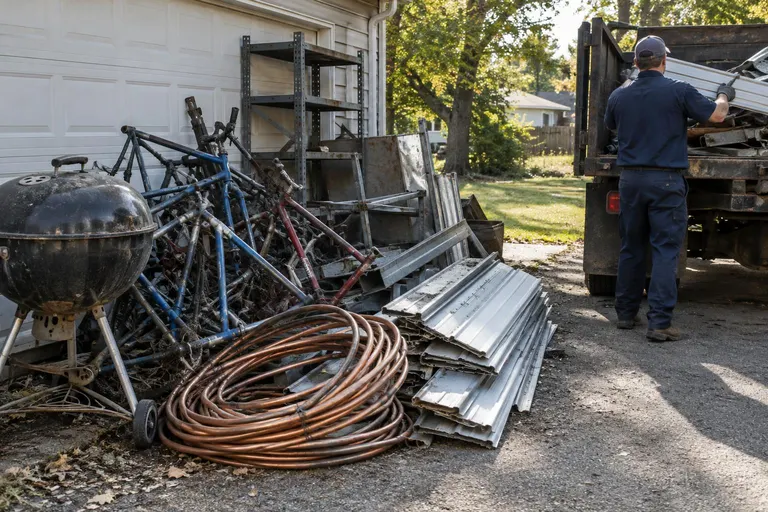
Scrap metal
Steel, aluminum, copper, grills, bikes and shelving
- Often reused2 out of 5
- Recyclable5 out of 5
- Heavy4 out of 5
- Special handling1 out of 5
- Bulky3 out of 5
- Where it usually goes
- Scrap recyclers
- Keep in mind
- Remove fuel, batteries and fluids first.
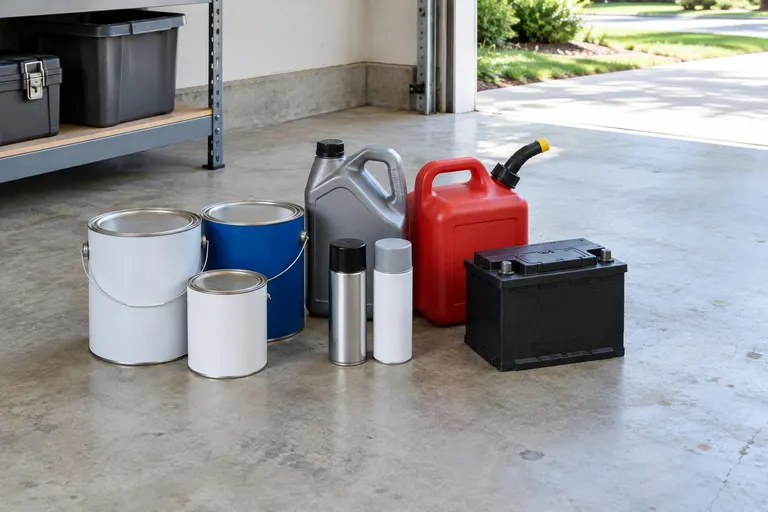
Hazardous household items
Paint, chemicals, propane, batteries and oil
- Often reused1 out of 5
- Recyclable2 out of 5
- Heavy2 out of 5
- Special handling5 out of 5
- Bulky1 out of 5
- Where it usually goes
- Household hazardous waste programs. We do not haul these
- Keep in mind
- Keep them in original containers and away from heat.
Can we take it?
Search the list for anything you are not sure about.
A general guide. Rules and fees vary by city, facility and item condition, and a crew confirms what applies to your job before loading. When in doubt, ask us.
Hauling words, in plain English.
- Cubic yard
- A cube three feet on each side, about the size of a washing machine. Junk and dumpsters are measured in cubic yards.
- Roll-off dumpster
- An open steel container delivered on a special truck, filled over days and hauled away when full.
- Tipping fee
- The charge a landfill or transfer station makes for accepting a load, often by weight.
- Transfer station
- A facility where waste is sorted and loaded onto larger trucks bound for a landfill or recycler.
- C and D debris
- Construction and demolition debris: lumber, drywall, tile, concrete, roofing and other building waste.
- Bulk waste
- Large household items such as furniture and appliances that do not fit in a regular trash cart.
- Trash-out
- A cleanout of everything left behind in a vacant property so it can be repaired, listed or re-let.
- Cleanout
- Clearing a space, such as a garage, an attic or a whole house, of everything that is not staying.
- E-waste
- Discarded electronics such as TVs, computers and phones, which are recycled to recover metals and glass.
- Hazardous waste
- Products such as paint thinner, pesticides and chemicals that can harm people or the environment if thrown out.
- Refrigerant
- The cooling fluid in refrigerators, freezers and air conditioners that must be removed before scrapping.
- Scrap metal
- Steel, aluminum, copper and other metals collected for recycling.
- Diversion
- Keeping waste out of the landfill through donation, reuse and recycling.
- Curbside pickup
- Regular city or county service for bins and, on set days, certain bulky items.
- Weight limit
- The maximum a dumpster or truck can carry, which heavy debris often reaches before the container is full.
- Fill line
- The marked top level a dumpster should not be loaded above.
- Swap
- Replacing a full dumpster with an empty one so a project can keep going.
- Heavy debris
- Material such as concrete, dirt, brick and shingles that fills a container by weight, not space.
- Mulching
- Chipping branches and brush into mulch instead of landfilling them.
- Donation partner
- A charity or reuse organization that accepts items in good condition.
- Photo quote
- A price based on photos of the items and the access, with no visit needed.
- Broom-clean
- Left empty and swept, ready for the next owner, tenant or trade.
Still not sure where it goes?
Text a photo of the item and we will tell you what happens to it.